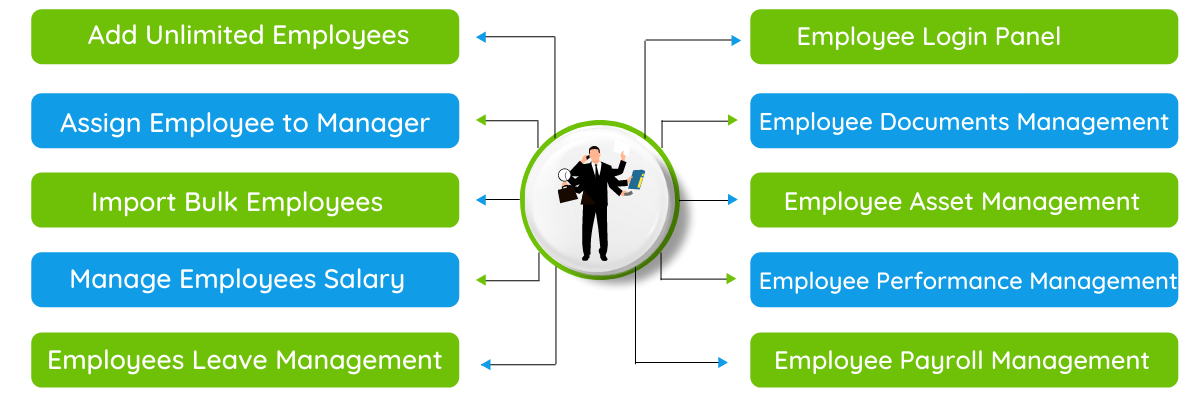
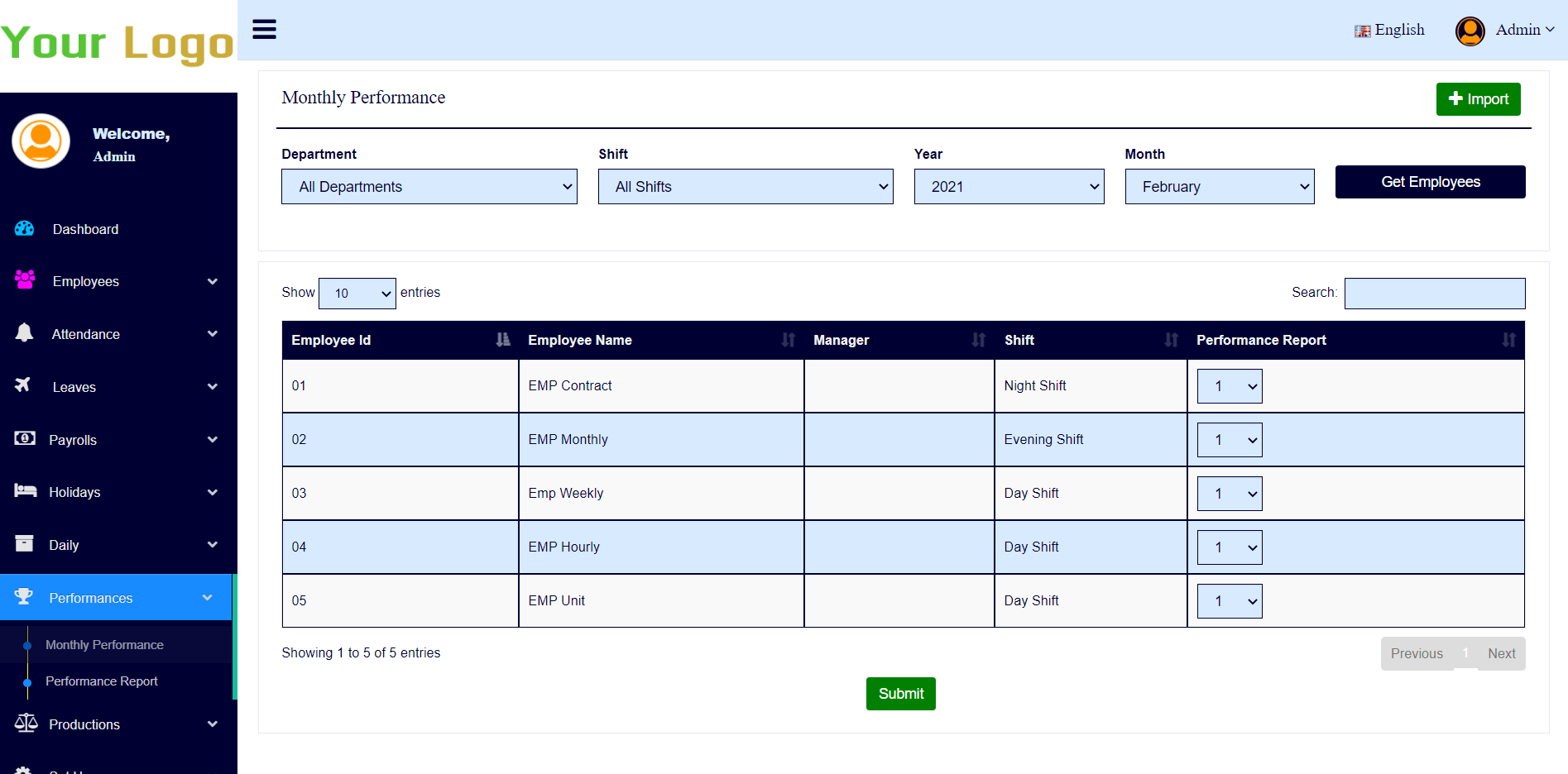
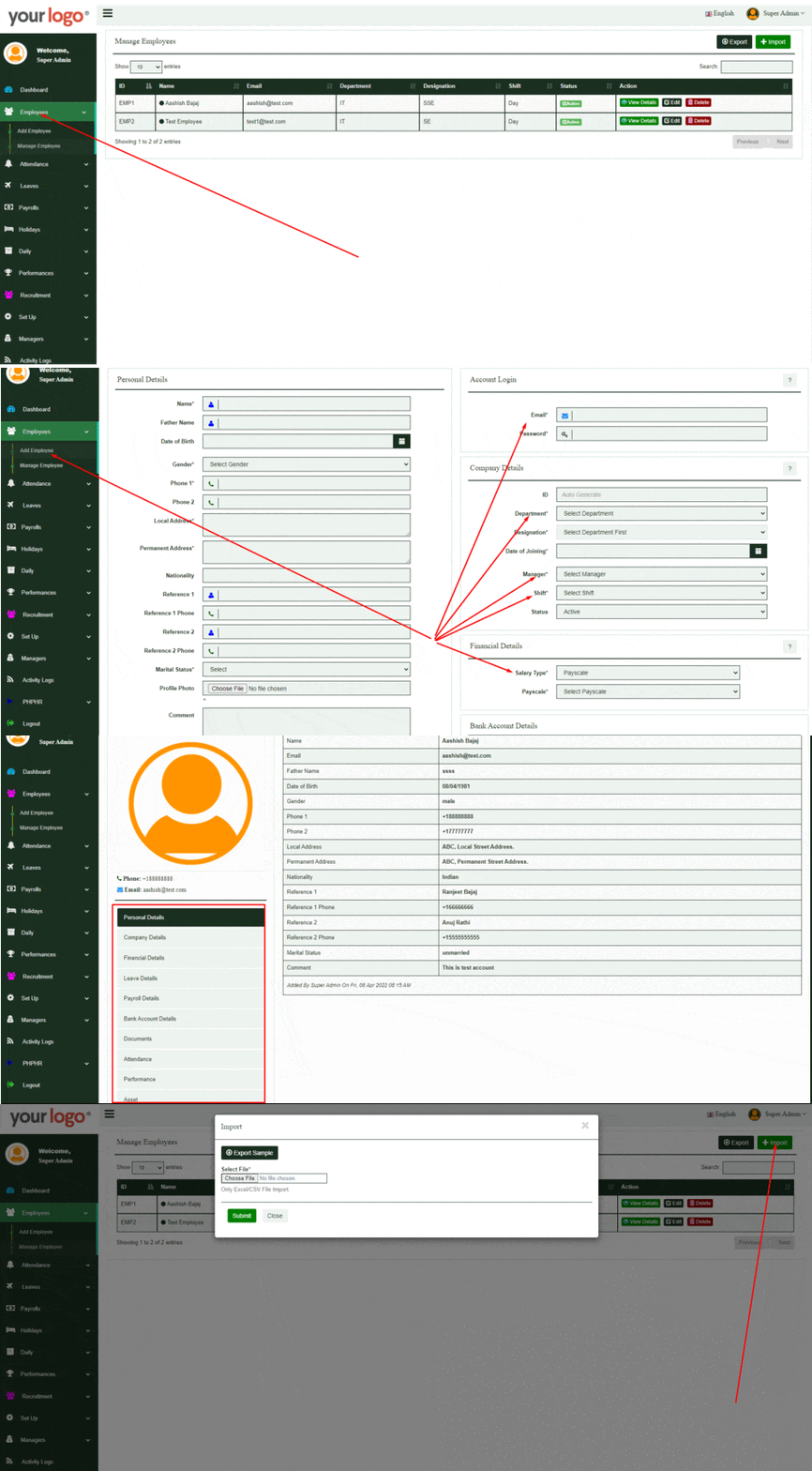
Performance management system is used to keep records of the employee’s daily performance. These system tell us about the working condition of employees. These system allows employees to review achievements and successes and put the current performance. HR will able to assign rating to the employees for their performance. It will completely and clearly show which employees are doing the best in organization.
PHP HR- Importance of Performance Management Software
Performance management system mostly used in big organizations. It helps to review performance reports of employees without spending much time. It helps to improve the individual productivity of a team. With the help of performance management system, you will give rating of every employee of the organization basis of their performance. It will help increase the performance orientation.
A Performance Management System (PMS) is a comprehensive framework designed to assess, manage, and improve employee performance within an organization. This system facilitates ongoing feedback, goal setting, and evaluation, enabling businesses to align employee contributions with organizational objectives. By effectively implementing a performance management system, organizations can enhance productivity, foster employee development, and drive overall success.
Key Features of a Performance Management System
Goal Setting and Alignment
A robust PMS allows organizations to set clear, measurable goals for employees that align with broader business objectives. This alignment ensures that every team member understands their role in achieving organizational success.
Continuous Feedback Mechanism
Regular feedback is essential for employee growth. A performance management system provides tools for managers and peers to give constructive feedback, fostering a culture of open communication and continuous improvement.
Performance Reviews and Appraisals
The PMS facilitates structured performance reviews and appraisals, allowing organizations to evaluate employee performance at set intervals. These reviews help identify strengths, areas for improvement, and development opportunities.
360-Degree Feedback
Many performance management systems incorporate 360-degree feedback, gathering input from multiple sources, including managers, peers, and subordinates. This holistic approach provides a comprehensive view of an employee’s performance.
Competency Frameworks
A PMS may include defined competency frameworks outlining the skills and behaviors required for various roles within the organization. This framework helps guide performance evaluations and development plans.
Personal Development Plans
The system allows employees to create personalized development plans based on performance reviews and feedback. These plans outline specific training, skill development, and career progression objectives.
Analytics and Reporting
Performance management systems often feature analytics tools that track employee performance trends, identify high performers, and assess the effectiveness of development programs. These insights inform strategic decision-making.
Integration with HR Systems
A PMS can integrate with other HR systems, such as payroll, recruitment, and learning management systems, providing a seamless experience and ensuring data consistency across platforms.
Recognition and Rewards
Many performance management systems include features for recognizing and rewarding employee achievements. This recognition boosts morale and motivates employees to excel in their roles.
Training and Development Resources
A PMS often provides access to training and development resources, enabling employees to enhance their skills and competencies as part of their performance improvement efforts.
Performance Improvement Plans (PIPs)
When performance issues arise, a PMS can facilitate the creation of Performance Improvement Plans to provide structured support and clear expectations for improvement.
User-Friendly Interface
A well-designed performance management system offers an intuitive interface that makes it easy for both managers and employees to navigate, complete evaluations, and track progress.
Benefits of a Performance Management System
Enhanced Employee Engagement
Regular feedback and recognition foster a sense of belonging and engagement among employees, leading to higher job satisfaction and morale.
Improved Performance and Productivity
By setting clear expectations and providing ongoing support, organizations can drive improved employee performance and productivity levels.
Alignment with Business Goals
A PMS ensures that individual employee goals are aligned with organizational objectives, enhancing overall performance and driving success.
Data-Driven Decision Making
Analytics and reporting features provide valuable insights into performance trends, enabling organizations to make informed decisions regarding talent management and development strategies.
Targeted Training and Development
Personalized development plans help identify skill gaps and training needs, allowing organizations to invest in targeted training initiatives that enhance employee capabilities.
Recognition of High Performers
A PMS allows organizations to identify and reward top performers, fostering a culture of excellence and motivating others to strive for high performance.
Continuous Improvement Culture
The emphasis on ongoing feedback and development fosters a culture of continuous improvement, where employees are encouraged to learn and grow.
Retention of Top Talent
Engaged employees are more likely to remain with the organization, reducing turnover rates and retaining valuable talent within the company.
Adaptability to Change
A performance management system can help organizations adapt to changing business environments by providing the tools to realign goals and priorities as needed.
Effective Succession Planning
By identifying high-potential employees and their development needs, organizations can build a strong pipeline of future leaders.
Challenges and Considerations
Employee Resistance
Implementing a performance management system may face resistance from employees who are accustomed to traditional performance appraisal methods. Organizations should communicate the benefits and provide training to ease the transition.
Time-Consuming Processes
If not managed effectively, performance evaluations can become time-consuming for managers and HR. Streamlining processes and utilizing automation can help alleviate this challenge.
Subjectivity in Evaluations
Ensuring objectivity in performance evaluations can be challenging. Organizations should provide training for managers on effective evaluation techniques and encourage the use of data-driven metrics.
Integration Difficulties
Organizations must ensure that the performance management system integrates smoothly with existing HR systems to avoid data silos and inefficiencies.
Maintaining Consistency
Consistency in evaluation criteria and feedback processes is crucial for fairness. Organizations should establish clear guidelines and standards for performance evaluations.
Performance management system is free and an open source software. It can effortlessly configure to meet the organizational needs. This system is easy-to-setup and use. The open source version is available for free and includes employee performance records. Its source code is available for download and upload it on server and use it.
Performance management system is an ongoing process of communication between a supervisor and an employee. It provides high quality, effective and useful services. This is a powerful tool to manage employee performance. It is used to review and track performance of your employees. With the help of this tool, you can identify employee growth opportunities.
Performance management system can improve employee morale, increase productivity and retain its top workers. It reduces paperwork. It saves your time, money and efforts and as well as it is beneficial for all employees of the organizations. The most important benefit is that this cycle is continuous and not annual. It improves business performance.
A Performance Management System is an essential tool for organizations committed to enhancing employee development and driving organizational success. By providing structured processes for goal setting, feedback, and performance evaluation, a PMS fosters a culture of continuous improvement and engagement. The benefits of implementing a robust performance management system are substantial, including improved employee performance, data-driven decision-making, and enhanced alignment with business goals. Ultimately, organizations that prioritize effective performance management will cultivate a motivated workforce, ensuring long-term growth and success.