Payroll is a list of company employees who are eligible to receive payments, as well as other employee benefits, as well as the amount that each person should receive. Along with the amount that each employee should receive for the hours worked or the duties performed, the payroll may also include information about past payments to company employees, including salaries. And withheld wages, bonuses and taxes or part of the processing company with compensation. So, our payroll system is use to manage such type payrolls and information of each and every employee.
It is displayed in the employee’s salary, including: deducted name, overtime, bonus and salary. This system makes it easier for the user to manage the payroll system because it does not take much time. This project is easy to operate and understandable for users.
The payroll management system is created in a web application, easy to understand and user-friendly, the main purpose of the system is to calculate the payroll of employees, the system contains administrators and users, administrators can manage all the data and the user they represent as an employee, but he cannot access all the information such as Add User.
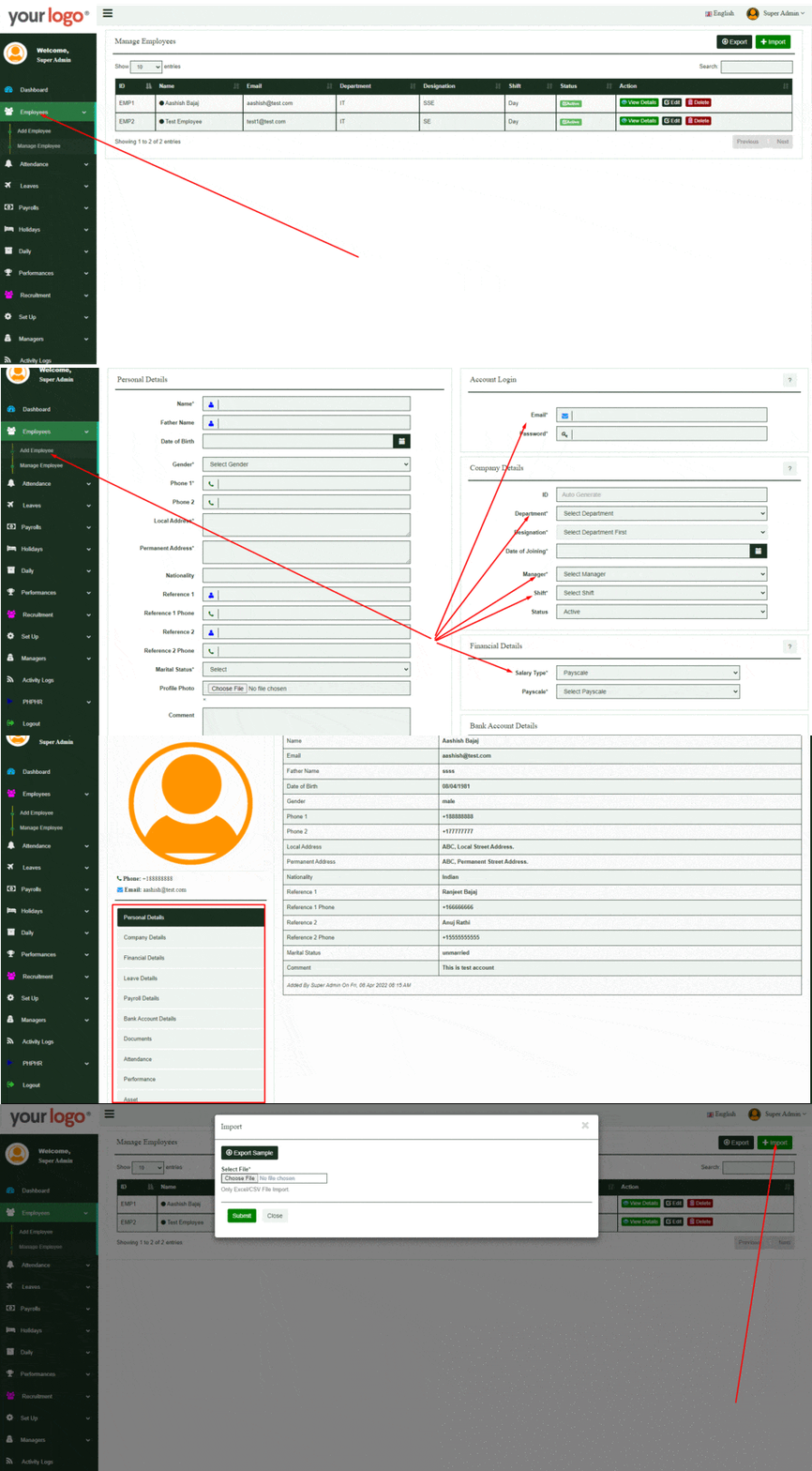
This system is designed to provide the ability to customize all payroll tasks for employees. First, the user needs to go through the login system to gain access, then the user can add, list, update and delete employee records. deals with the financial aspects of employee salaries, deductions, bonuses and net wages. Users can view individual employee bills and update their payments, and users can also manage deductions, change overtime and pay rates.
An Employee Payroll Management System is a software application that helps organizations manage and track employee payroll, including salaries, deductions, bonuses, and taxes. Building such a system using PHP allows businesses to streamline their payroll processes, ensuring accurate payments, tax compliance, and easy access to payroll records. In this article, we will discuss the structure and components of an Employee Payroll Management System built with PHP.
Introduction to Employee Payroll Management System
A payroll management system automates the process of calculating and distributing employee salaries. It helps businesses manage wages, bonuses, deductions, and statutory contributions. By creating an employee payroll management system using PHP, businesses can centralize payroll functions, reduce errors, and improve efficiency.
PHP (Hypertext Preprocessor) is a popular server-side scripting language often used to develop dynamic web applications. PHP is well-suited for creating payroll management systems as it can easily handle database interactions, user input, and generate dynamic reports. The system can be accessed online, making it suitable for businesses of all sizes.
Key Features of the Employee Payroll Management System
The following are the essential features of a payroll management system built in PHP:
1. Employee Management
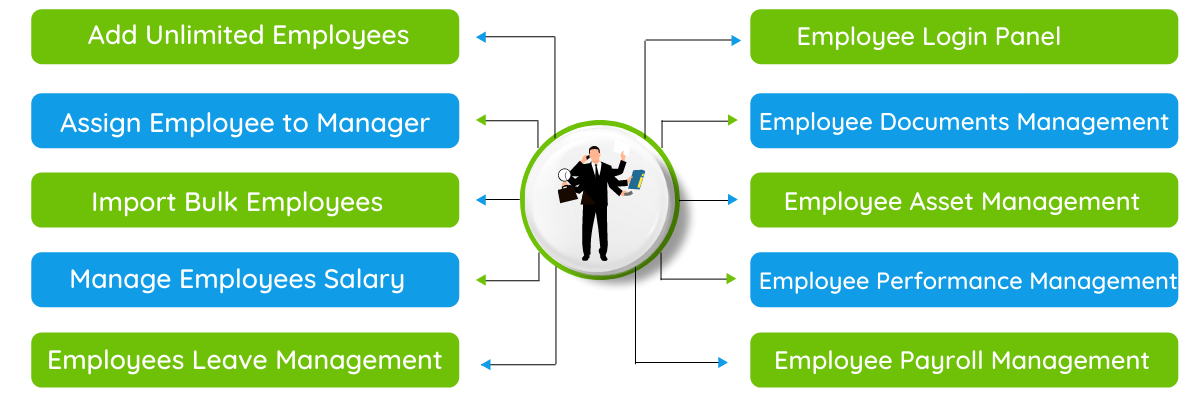
The system should allow the addition, modification, and deletion of employee records. Basic details like employee name, ID, department, position, salary structure, and contact information need to be stored. A form-based interface should be created for adding and updating employee information.
2. Salary Calculation
The core feature of the system is the calculation of employee salaries. The system must allow the configuration of salary components, such as basic salary, allowances (HRA, DA), and bonuses. The salary can also be calculated based on various factors like working hours, overtime, and deductions for tax, insurance, and provident fund (PF).
3. Tax Management
A payroll system should calculate statutory taxes for employees, such as income tax, Provident Fund (PF), and Professional Tax (PT). The system should include tax slabs, exemptions, and deductions in the calculation process. It should also handle tax calculations based on the employee’s salary and tax rules specific to the country or state.
4. Payslips
The system should generate payslips for employees every month. Payslips typically include detailed information about the employee’s earnings, deductions, and the final amount paid. These payslips should be downloadable and printable in PDF format, with secure access for employees to view their payment history.
5. Leave Management
The system should track employee attendance and manage leave requests. Employees should be able to request leave, and the system should update the leave balance accordingly. Leave records should also be integrated with the salary calculation, so deductions are made when an employee takes unpaid leave.
6. Reporting
The payroll management system should generate various reports, such as salary summaries, tax reports, and attendance reports. These reports can be useful for audits, tax filings, and business analysis. It should also allow exporting reports in formats like PDF, CSV, or Excel.
7. Security and Access Control
The system should implement role-based access control, allowing only authorized personnel (HR, Admin) to modify payroll information, while employees can only access their personal data. This ensures confidentiality and prevents unauthorized changes to payroll data.
Technologies Used
The following technologies and tools are typically used to develop an Employee Payroll Management System:
1. PHP:
PHP is used for server-side scripting to create dynamic web pages and handle business logic. It interacts with the database to store and retrieve employee data and salary calculations.
2. MySQL:
MySQL is a popular relational database management system used to store employee details, salary data, and payroll records. It supports SQL queries for efficient data retrieval and updates.
3. HTML/CSS:
HTML is used for the structure of the web pages, and CSS is used for styling the user interface. Together, they ensure that the payroll management system is user-friendly and visually appealing.
4. JavaScript:
JavaScript is used for adding interactivity to the web pages. For example, it can be used to validate forms, handle dynamic calculations, and enhance user experience.
5. Bootstrap:
Bootstrap is a front-end framework used to make the user interface responsive, ensuring that the payroll management system works well across different devices such as desktops, tablets, and smartphones.
Database Structure
A payroll management system requires a well-structured database to store employee and payroll information. Below is a simplified version of the database schema:
Employee Table:
This table stores employee details such as ID, name, department, position, salary, and contact information.
id (INT, Primary Key)
name (VARCHAR)
department (VARCHAR)
position (VARCHAR)
base_salary (DECIMAL)
contact (VARCHAR)
Salary Table:
This table contains the salary components for each employee, including allowances, deductions, and final salary.
salary_id (INT, Primary Key)
employee_id (INT, Foreign Key)
basic_salary (DECIMAL)
hra (DECIMAL)
allowances (DECIMAL)
tax_deductions (DECIMAL)
net_salary (DECIMAL)
Leave Table:
This table tracks leave records for employees.
leave_id (INT, Primary Key)
employee_id (INT, Foreign Key)
leave_type (VARCHAR)
leave_start_date (DATE)
leave_end_date (DATE)
leave_status (VARCHAR)
Payslip Table:
This table stores the payslips generated for employees, including details like salary, deductions, and net payment.
payslip_id (INT, Primary Key)
employee_id (INT, Foreign Key)
month (VARCHAR)
year (YEAR)
gross_salary (DECIMAL)
net_salary (DECIMAL)
tax_deductions (DECIMAL)
Steps to Develop the Payroll Management System in PHP
Set Up the Development Environment
Begin by setting up your development environment with PHP, MySQL, and a web server such as Apache. Tools like XAMPP or WAMP can simplify this process.
Create the Database
Using MySQL, create the necessary database and tables mentioned above to store employee information, salary details, and leave records.
Design the Front-End Interface
Create HTML forms to allow users (employees and administrators) to interact with the system. Use CSS and JavaScript for styling and validation.
Develop the PHP Scripts
Write PHP scripts to handle the business logic of the payroll system. These scripts should process employee data, calculate salaries, and generate reports.
Implement Security Measures
Ensure that the system is secure by implementing login mechanisms, role-based access, and encryption for sensitive data.
Test the System
Test the system thoroughly to ensure that all features are working correctly, including salary calculations, tax deductions, leave management, and reporting.
Deploy the System
Once testing is complete, deploy the system on a live server, ensuring that it is accessible to all authorized users.
What is an Employee Payroll Management System?
An Employee Payroll Management System is a software solution that automates the process of calculating and managing employee salaries, wages, bonuses, deductions, taxes, and other payroll-related tasks. It simplifies the payroll process, reducing errors, saving time, and ensuring timely and accurate payments.
Why should I use PHP for building a payroll management system?
PHP is a popular server-side scripting language known for its ability to interact with databases and process dynamic content. It is ideal for creating payroll management systems as it can handle complex payroll calculations, store employee data securely, and generate dynamic reports. Additionally, PHP is easy to learn and integrate with various web technologies.
What features should a Payroll Management System include?
A Payroll Management System should include features like employee management (adding, updating, and deleting employee details), salary calculations (including basic salary, allowances, deductions, and bonuses), tax management (automatically calculating tax and statutory contributions), payslip generation (creating downloadable payslips for employees), leave management (tracking leaves and updating salary based on leaves taken), reporting (generation of payroll reports and tax filings), and security and access control (ensuring authorized access to payroll data).
Can the payroll system handle multiple employees and departments?
Yes, the payroll system can be designed to manage multiple employees across different departments. The system can store employee information, track their salaries, and generate payroll for each department individually or as a whole, depending on how it’s configured.
How does the system calculate employee salary?
The system calculates employee salary based on predefined salary components such as basic salary, allowances (like HRA, DA), bonuses, and deductions (like tax, provident fund, insurance). It takes into account factors like working hours, overtime, and leave records, applying the appropriate rules to compute the net salary.
Is the system capable of handling tax calculations?
Yes, the payroll system can handle tax calculations based on the relevant tax slabs and rules of the country or region. It calculates taxes such as income tax, social security, and other statutory deductions automatically, ensuring compliance with the latest tax regulations.
Can employees access their payroll details?
Yes, the payroll management system can allow employees to view their payroll information through a secure login. Employees can access their payslips, check their tax deductions, track their leave balances, and download reports, all within a secure and restricted interface.
How secure is the payroll management system?
Security is a crucial aspect of any payroll management system. PHP-based systems can implement measures like secure login with username/password authentication, encryption of sensitive data, role-based access control, and SSL encryption for secure data transmission. These measures ensure that only authorized personnel can access or modify payroll data.
What is the role of a database in the payroll management system?
The database plays a key role in storing and retrieving data related to employees, salary calculations, deductions, leaves, and other payroll information. The database ensures data consistency, allows for efficient querying of records, and supports generating reports and payslips for employees.
Can this system be integrated with other business tools?
Yes, the payroll management system can be integrated with other tools such as accounting software, HR management systems, and time-tracking applications. Integration helps streamline business operations, ensuring that payroll data syncs with accounting and financial reports and that employees’ time data is automatically fed into payroll calculations.
How does the system generate payslips?
The payroll system generates payslips by aggregating salary components (earnings and deductions) for an employee based on their data and the payroll configuration. Payslips are then formatted and made available to employees, typically in downloadable PDF format, which can be printed or stored for future reference.
Can the system manage different types of leaves (paid, unpaid, sick)?
Yes, the payroll system can be configured to track various types of leaves, such as paid leave, unpaid leave, sick leave, and casual leave. The system updates the leave balance and adjusts the salary calculations accordingly, making sure that deductions are made for unpaid leaves.
Is the system scalable?
Yes, the payroll system can be scalable, meaning it can handle increasing numbers of employees and more complex payroll calculations as the business grows. The system can be expanded by adding more features, integrating with additional tools, and adjusting configurations to suit a larger workforce or more complex payroll rules.
How does the payroll system handle different pay structures?
The payroll system can accommodate different pay structures, such as hourly, weekly, monthly, or project-based payments. It allows businesses to configure pay rates, overtime rules, bonuses, and commissions based on the specific needs of employees, job roles, or projects.
Can I customize the payroll system to match my business needs?
Yes, PHP-based payroll systems can be customized to suit specific business requirements. Customization can include adding new salary components, modifying tax rules, integrating with other systems, or designing a tailored user interface to improve employee experience.
How do I ensure my payroll system is compliant with labor laws?
By regularly updating the system to reflect changes in tax regulations, salary structure, minimum wage laws, and other statutory requirements, businesses can ensure that their payroll system remains compliant. PHP payroll systems can be programmed to handle such updates automatically or can be modified to reflect new laws and guidelines as they change.
Can the system generate reports for audits or tax filings?
Yes, the system can generate various types of reports, including salary reports, tax reports, leave records, and others. These reports can be exported in different formats like PDF, CSV, or Excel, making them suitable for audits, tax filings, and business analysis.
What is the cost of implementing a payroll management system?
The cost of implementing a payroll management system varies depending on the complexity of the system, the number of employees, and additional features required. Open-source systems may reduce the initial cost, but customization and development work may add to the expense. Hosted solutions also offer subscription-based pricing models.
Is training required to use the payroll management system?
Training may be required to ensure that administrators and employees understand how to use the payroll system effectively. Most systems offer user manuals, online documentation, and customer support to help users get acquainted with the system’s functionalities.
How do I maintain the payroll management system?
Maintaining the system involves regular updates to ensure the software functions smoothly and remains compliant with tax laws. Additionally, backing up payroll data, monitoring system performance, and fixing any bugs or errors are key parts of system maintenance.
An Employee Payroll Management System in PHP simplifies payroll tasks and ensures accuracy in salary distribution. By automating calculations, tax management, and reporting, the system saves time and reduces errors. PHP, along with MySQL and other technologies, provides a powerful framework for building such systems. The resulting application can be a valuable tool for businesses to manage payroll, maintain compliance, and improve efficiency in human resource management.