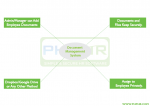
Streamlining HR with Employee Records Management Software
In the modern business landscape, human resources is no longer just about hiring and firing it’s about people management, compliance, analytics, and strategic planning. Managing employee information accurately and securely is crucial to operational efficiency and business success. This is where Employee Records Management Software (ERMS) becomes a vital asset.
With tools like PHP HR and PHP Payroll, organizations can digitize and centralize their HR processes, streamline operations, and ensure legal compliance-all while reducing manual paperwork and administrative overhead.
What is Employee Records Management Software?
Employee Records Management Software is a digital solution that allows companies to manage, store, track, and analyze employee information in a secure and centralized environment.
It eliminates the need for physical records and scattered spreadsheets by offering a unified platform where HR teams can access everything from personal details and employment history to attendance, appraisals, and salary records.
Whether you’re a startup with 10 employees or a growing business with hundreds, ERMS helps reduce human error, ensure regulatory compliance, and boost HR efficiency.
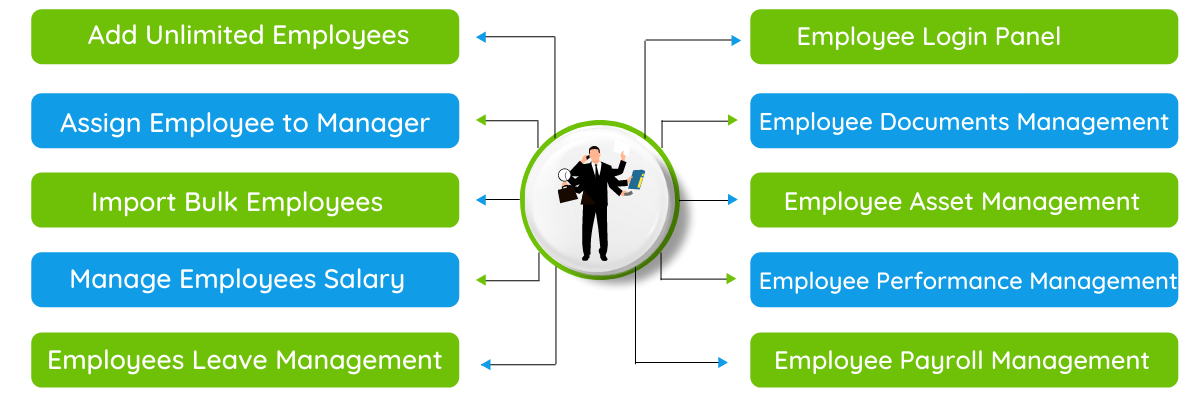
Key Features of ERMS
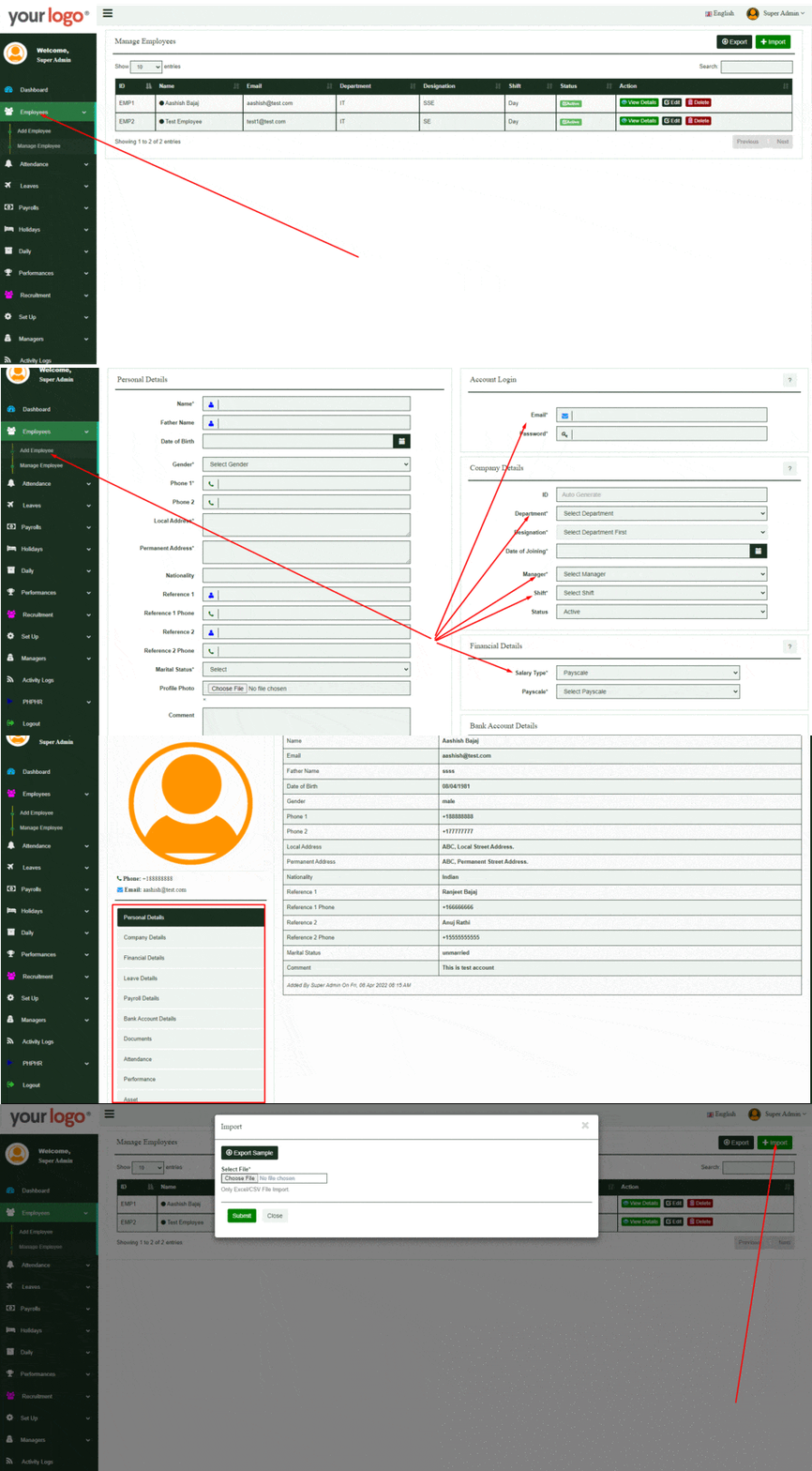
1. Centralized Employee Database
ERMS allows HR departments to create individual employee profiles that include:
Basic personal information (name, DOB, contact details)
When integrated with attendance and leave data, payroll becomes more accurate, faster, and transparent.
6. Access Control and Security
Sensitive employee data must be protected. ERMS platforms offer:
Role-based access for Admin, HR, and Employees
Encrypted data storage
Secure login and audit trails
Employee self-service portals
This prevents unauthorized access and ensures compliance with data protection regulations such as GDPR or local labor laws.
7. Compliance and Reporting
Staying compliant with HR regulations is easier with:
Automated statutory compliance (PF, ESI, TDS)
Alerts for policy or document expiry
Customizable reports for audits, salary, headcount, leave
Export options (PDF, Excel, CSV)
This ensures businesses remain compliant with state and central labor laws while reducing the manual work needed for reporting.
Benefits of Using ERMS
Implementing an Employee Records Management System brings numerous tangible benefits:
🔒 Enhanced Data Security: Centralized and encrypted records reduce the risk of data loss or leaks.
⏱️ Increased Efficiency: Automating manual tasks frees up time for strategic HR activities.
📊 Informed Decision-Making: HR can generate real-time reports to support workforce planning.
🌍 Remote Accessibility: Cloud-based or intranet access ensures business continuity from anywhere.
✅ Regulatory Compliance: The system ensures regular updates, reminders, and documentation needed to comply with labor laws.
These benefits translate to better employee experience, stronger workforce planning, and reduced HR costs.
Popular Employee Records Management Solutions
🔹 PHP HR
PHP HR is a lightweight, open-source HR management software that helps businesses manage employee data without recurring subscription fees. Key modules include:
Employee profiles with ID card generation
Attendance and leave tracking
Holiday calendar, company policy uploads
Task management, shift scheduling
Mobile-responsive interface
Designed for small to medium enterprises, PHP HR offers an intuitive dashboard and full administrative control.
🔹 PHP Payroll
PHP Payroll focuses on streamlining the salary and compliance process. Built with scalability and simplicity in mind, it includes:
PHP Payroll can be self-hosted, is customizable, and helps businesses maintain full control over their payroll processes.
In the digital age, managing employee records manually is inefficient and risky. Employee Records Management Software provides a centralized, secure, and automated solution that transforms HR operations from reactive to proactive. For businesses seeking cost-effective, customizable, and reliable solutions, PHP HR and PHP Payroll offer the perfect blend of simplicity and functionality. Whether you’re just starting or scaling rapidly, adopting ERMS is a strategic move that leads to better organization, compliance, and workforce satisfaction.
Frequently Asked Questions (FAQs)
❓ What is Employee Records Management Software (ERMS)?
Employee Records Management Software is a digital platform that allows businesses to systematically manage all aspects of employee information. This includes storing personal data, tracking job history, managing attendance and leaves, maintaining compliance documents, processing payroll, and more. It replaces manual file-keeping or Excel sheets with a secure, centralized, and accessible online system that reduces human error and improves organizational efficiency.
❓ Why should I use PHP HR for managing employee data?
PHP HR is an open-source based HR management solution designed for small and mid-sized businesses. It offers a wide range of features such as attendance tracking, leave management, employee profiles, and document storage, all accessible via a user-friendly interface. You can learn more or download it at the official website: phphr.com.
❓ How does PHP Payroll simplify salary processing?
PHP Payroll automates salary calculations, generates payslips, manages statutory deductions like PF and TDS, and integrates seamlessly with PHP HR for accurate payroll based on attendance and leave data. It helps ensure timely and error-free salary processing. More details and downloads are available at phppayroll.com.
❓ Are PHP HR and PHP Payroll free to use?
Yes, both PHP HR and PHP Payroll are open-source based and freely available for download and use. Hosting and customization costs may apply depending on your infrastructure and needs. Visit phphr.com and phppayroll.com for official downloads and support options.
❓ Can PHP HR integrate with biometric devices or other systems?
Yes. Being open-source based, PHP HR supports integration with biometric attendance devices, third-party payroll software, and communication tools like SMS or email gateways. These integrations require technical setup but allow you to customize the system for your workflow.
❓ Is the data stored in PHP HR and PHP Payroll secure?
Security depends on hosting and configuration. Both platforms support role-based access, password protection, and encrypted storage of sensitive information. It’s recommended to host them on secure servers with SSL and to regularly update the software for best protection.
❓ Can employees access their own records?
Yes, PHP HR includes an employee self-service portal allowing staff to view and update personal information, request leave, view attendance logs, and download payslips when PHP Payroll is used.
❓ How do I get started with PHP HR and PHP Payroll?
Start by visiting phphr.com and phppayroll.com to download the latest software versions. Installation requires a web server with PHP and MySQL support. Follow the setup guides on these sites or hire a developer for assistance.
❓ What technical skills are required?
Basic familiarity with PHP, MySQL, and web hosting is helpful for installation and customization. Day-to-day operations like managing records and processing payroll are designed for users with minimal technical knowledge.
❓ Can PHP HR and PHP Payroll be customized?
Absolutely. Both are open-source based and highly customizable. You can modify features, UI, workflows, or integrate with other business systems. If needed, professional developers can help tailor the software to your needs.
PHP HR and PHP Payroll provide powerful, cost-effective, and customizable solutions for managing employee records and payroll processing. Being open-source based platforms, they offer flexibility and control to businesses of all sizes, especially small and medium enterprises seeking efficient HR management without the burden of high costs. With seamless integration capabilities, secure data handling, and employee self-service features, these tools simplify HR workflows and improve organizational productivity.
To get started, visit phphr.com and phppayroll.com to download the software and explore how these solutions can transform your HR and payroll management processes.