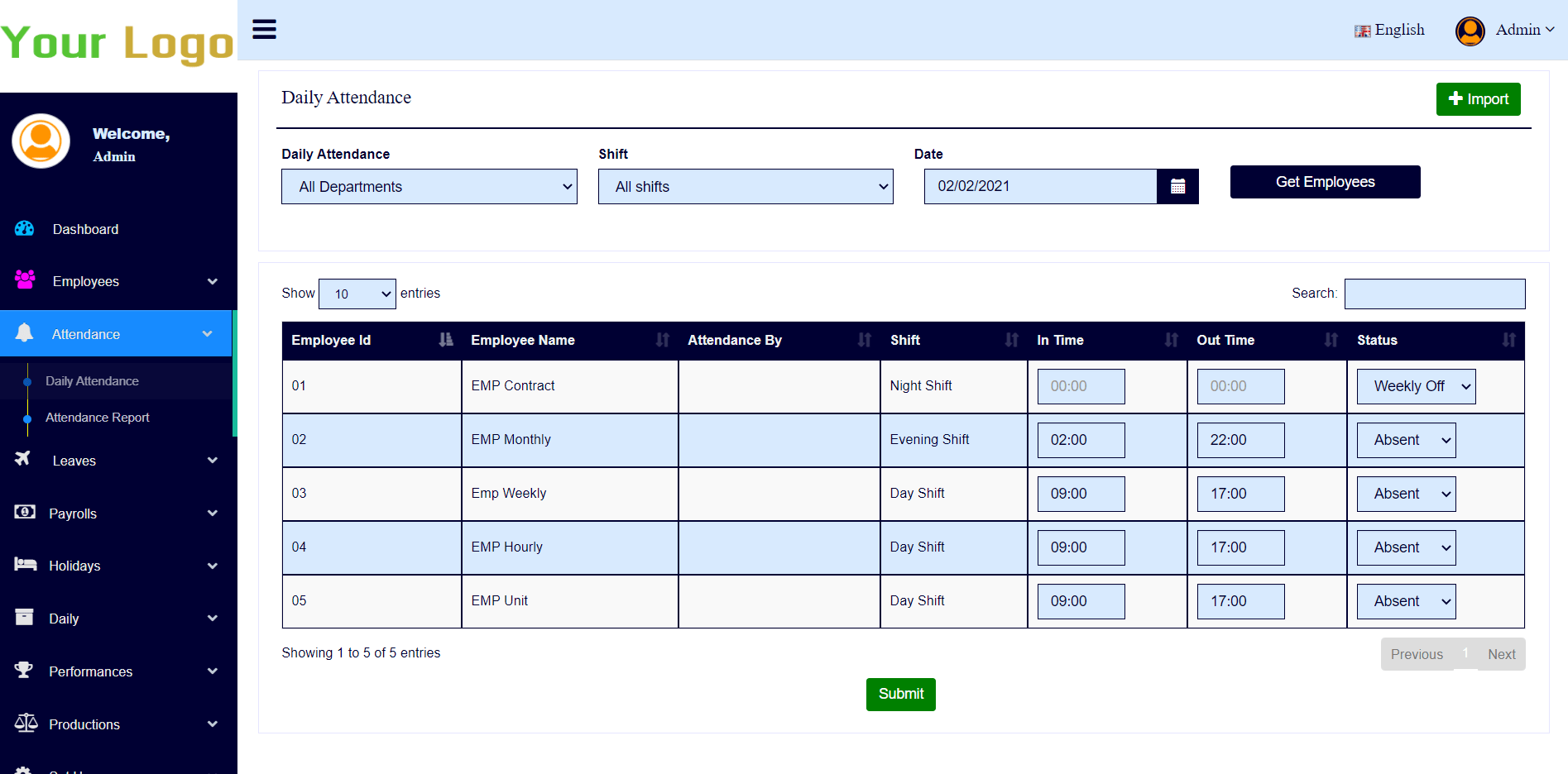
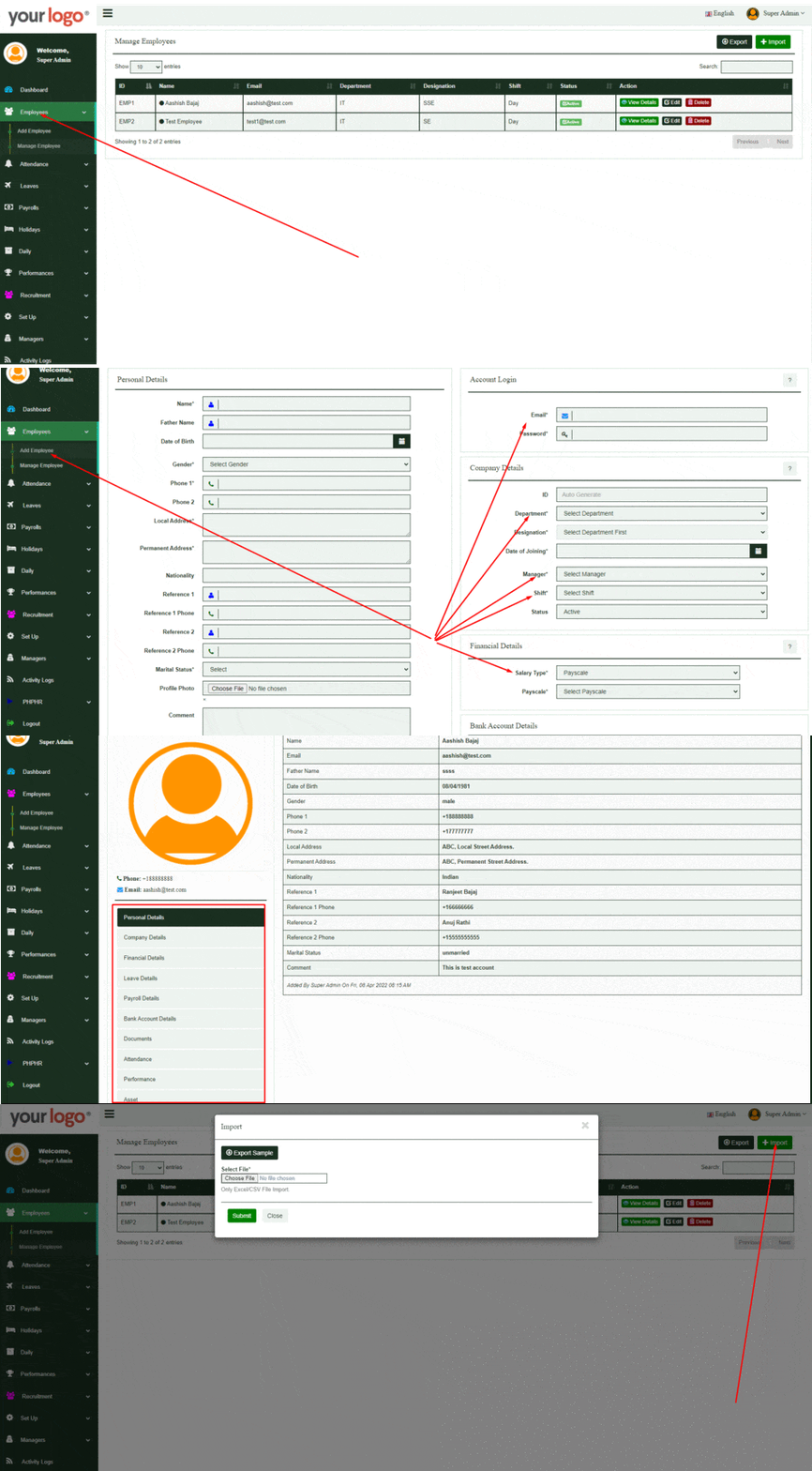
Online remote employee attendance management systems provide different reports based on the available attendance data.
Remote employee monitoring attendance software is a form of computer monitoring software that is used for remote employee performance management. These solutions are used by businesses that want to increase remote employee engagement, identify productivity bottlenecks, and understand how their remote workforce operates.
Employee attendance software is a type of business application designed to track and optimize the hours that employees spend on the job and keep records of wages and salaries paid. The most important features of time and attendance include: Tracking employee hours. Tracking wages paid. Automating payroll processes.
Online remote employee attendance management systems provide different reports based on the available attendance data. Using a self-hosted attendance management system, remote employees can record their working hours without any hassles.
Regular attendance and punctuality are vital attributes for all employees. It is important for employees to attend work regularly and to arrive at work on time because failure to do so detrimentally affects employee morale and productivity.
Accountability and Productivity improve remote worker time management. Overcome common workflow bottlenecks to improve productivity. Understand where employee engagement and productivity are lagging and find solutions to resolve related issues. Ensure accountability across all departments to improve.
Remote working has become the payroll part of business in every corner of the world. Managing the remote employees comes up as a challenge here. Tracking employees out of your sight and tracing the work and timesheets is very important.
As remote work becomes the new norm, organizations worldwide are grappling with the challenges of managing employee attendance effectively. Traditional attendance systems often fall short in addressing the unique needs of a remote workforce. Remote employee attendance software emerges as a robust solution, enabling seamless tracking, monitoring, and management of employee work hours and productivity. This article delves into what remote employee attendance software is, its key features, benefits, and how businesses can implement it to optimize workforce management.
What is Remote Employee Attendance Software?
Remote employee attendance software is a digital tool designed to monitor and track the attendance of employees working from various locations. These systems offer features like clock-in/clock-out tracking, geolocation verification, activity monitoring, and seamless integration with payroll systems. By automating attendance management, this software ensures accuracy, compliance, and improved productivity.
Key Features of Remote Employee Attendance Software
Real-Time Clock-In/Clock-Out: Employees can log their work hours through mobile apps, desktop software, or web portals, making attendance tracking easy and efficient.
Geolocation and GPS Tracking: This feature allows employers to verify that employees are working from approved locations. It is particularly useful for field workers and remote teams.
Biometric or Facial Recognition: Advanced systems use biometric or facial recognition technology to prevent fraudulent practices like proxy attendance.
Integration with Payroll Systems: The software automatically calculates total work hours, overtime, and leave balances, streamlining payroll processes.
Activity and Productivity Monitoring: Some solutions provide detailed insights into employee activities, helping managers assess productivity levels and identify areas for improvement.
Customizable Work Schedules: Supports flexible schedules to accommodate different time zones, working hours, or rotational shifts.
Leave and Absence Management: Tracks leave requests, approvals, and balances, integrating seamlessly with attendance data.
Automated Reporting: Generates detailed reports for managers and HR teams, offering insights into attendance trends, compliance, and irregularities.
Mobile Accessibility: Enables employees to mark attendance, request leave, and view schedules directly from their smartphones.
Automated systems reduce errors associated with manual attendance tracking. Employees are held accountable for their logged hours, promoting punctuality and reliability.
Improved Transparency:
Both employees and managers have access to clear and detailed records of attendance, work hours, and leave balances, minimizing disputes.
Streamlined Payroll Processing:
Integration with payroll systems ensures accurate calculations of salaries, overtime, and deductions, saving time and reducing errors.
Optimized Productivity:
Features like activity monitoring and performance analytics provide actionable insights, enabling better decision-making and workforce optimization.
Flexibility for Remote Teams:
The software caters to the unique needs of remote teams, allowing for customized schedules and real-time updates, regardless of location.
Legal Compliance:
By automating compliance with labor laws and company policies, the software reduces the risk of violations and associated penalties.
How to Choose the Right Remote Employee Attendance Software
When selecting a remote employee attendance system, consider the following factors:
Ease of Use: Choose software with an intuitive interface that requires minimal training.
Integration Capabilities: Ensure compatibility with your existing tools, such as payroll, HR, and project management systems.
Scalability: Opt for a solution that can grow with your organization, accommodating additional users and features as needed.
Mobile Accessibility: Mobile-friendly platforms are essential for employees working from various locations.
Customization Options: The software should be adaptable to your company’s specific attendance policies and scheduling needs.
Security: Ensure the platform employs robust data encryption and secure authentication protocols to protect employee information.
Steps to Implement Remote Employee Attendance Software
Assess Organizational Needs:
Identify your company’s specific attendance challenges and define clear objectives for implementing the software.
Research and Select a Vendor:
Evaluate different vendors based on features, pricing, user reviews, and customer support.
Configure the System:
Customize the software to align with your attendance policies, work schedules, and compliance requirements.
Train Employees and Managers:
Conduct training sessions to ensure all users understand how to operate the system effectively.
Monitor and Optimize:
Regularly review system performance and employee feedback to make necessary adjustments and improvements.
Challenges Addressed by Remote Attendance Software
Time Zone Differences: Automates scheduling and attendance tracking across multiple time zones, facilitating seamless collaboration.
Lack of Visibility: Provides managers with real-time insights into employee attendance and productivity, ensuring transparency.
Manual Errors: Reduces inaccuracies and discrepancies in attendance records, enhancing data reliability.
Fraudulent Practices: Prevents issues like buddy punching and proxy attendance through advanced verification methods.
Popular Use Cases for Remote Employee Attendance Software
Freelancers and Contractors: Tracks billable hours and project deliverables for independent contributors.
Distributed Teams: Manages attendance and schedules for employees spread across different locations.
Field Employees: Ensures accurate tracking of attendance for workers in on-site or mobile roles.
Startups and Small Businesses: Provides an affordable and efficient solution for managing small remote teams.
Large Corporations: Simplifies attendance tracking for multinational organizations with diverse remote work policies.
What is remote employee attendance software?
Remote employee attendance software is a digital tool designed to track and manage the attendance of remote workers. It allows employees to log in their work hours, monitor productivity, and track location from anywhere, while also providing real-time insights and reports for managers.
How does remote attendance software work?
Employees can log their work hours using an app, web portal, or desktop application. The software tracks clock-in/clock-out times, GPS location, and may include biometric or facial recognition to ensure accuracy. It integrates with payroll systems for streamlined processing.
Can remote attendance software track employee location?
Yes, most remote attendance software includes GPS or geolocation tracking to monitor employees’ locations and ensure they are working from approved places, especially in cases where location-specific tasks need to be verified.
How does the software handle multiple time zones?
Remote employee attendance software is equipped with features to handle multiple time zones. It allows businesses to manage employees working in different regions, providing flexibility while maintaining accurate records for everyone.
Is remote employee attendance software secure?
Yes, the software typically uses encryption, secure login processes, and authentication methods to protect sensitive employee data. Security features are vital to ensure compliance with data protection regulations.
Does the software integrate with other business systems?
Most remote attendance software integrates with existing HR systems, payroll solutions, and project management tools, providing a seamless workflow across different functions of an organization.
Can employees request time off through the software?
Yes, many systems include a feature for employees to submit time-off requests. Managers can review and approve these requests directly through the software, helping streamline absence management.
How can remote attendance software help with compliance?
The software ensures that companies comply with labor laws and regulations related to work hours, overtime, and break times. It helps managers track attendance patterns and flags potential violations of labor laws, reducing the risk of fines or penalties.
Is the software suitable for small businesses?
Yes, remote employee attendance software is scalable and can be used by businesses of all sizes. Small businesses can benefit from cost-effective solutions that streamline attendance tracking and improve overall efficiency.
How can managers track employee productivity with this software?
Many remote attendance systems offer productivity tracking features that monitor work activity, project progress, and idle time. This helps managers ensure that employees are focused and completing tasks efficiently.
Can employees in different locations access the software?
Yes, remote attendance software is designed to be accessible from any location. Employees can log in from their mobile devices or computers, making it ideal for teams working across different cities or countries.
Does the software prevent attendance fraud?
Many remote attendance systems include features like biometric recognition or GPS tracking to prevent fraud, such as buddy punching (where one employee punches in for another).
How do I choose the best remote employee attendance software?
When choosing the software, consider factors like ease of use, integration with existing systems, mobile access, security features, scalability, and customer support. Make sure it meets the specific needs of your business and remote work policies.
Can the software be customized to fit specific needs?
Yes, many remote employee attendance software solutions are customizable, allowing businesses to tailor settings, schedules, and policies to meet their unique requirements.
Is there a trial version of the software?
Many providers offer trial versions or demos, so businesses can test the software before committing to a purchase. This allows you to evaluate features, functionality, and ease of use.
What kind of support is available for remote employee attendance software?
Most software providers offer customer support through multiple channels, such as phone, email, or live chat. They may also provide online resources, tutorials, and guides to help users get the most out of the system.
How much does remote employee attendance software cost?
The cost can vary depending on the features, number of employees, and provider. Some systems offer pay-per-user pricing, while others may have tiered subscription models based on the size of your business. It is best to compare pricing plans based on your organization’s needs.
Can the software track overtime?
Yes, remote attendance software can track overtime hours automatically, alerting managers when employees exceed their regular work hours. This ensures compliance with overtime policies and accurate payroll processing.
How do I implement remote attendance software in my organization?
To implement the software, start by assessing your organization’s specific attendance needs. Choose the right software, set up the system, integrate it with existing tools, and train employees and managers. Monitor usage to ensure smooth adoption and identify areas for improvement.
Can remote employee attendance software improve team collaboration?
While the primary purpose is attendance tracking, many systems also facilitate communication and collaboration by integrating with project management tools and offering features like task assignment and progress monitoring. This enhances overall team coordination.
Remote employee attendance software is an essential tool for organizations embracing remote work. It not only simplifies attendance tracking but also enhances accountability, transparency, and productivity. By choosing the right solution and implementing it effectively, businesses can overcome the challenges of remote workforce management and foster a culture of trust and efficiency. Whether you’re a small startup or a large corporation, investing in remote attendance software is a step toward a more organized and productive future.