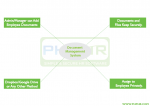
Both Offer Letters and Appointment Letters play crucial roles in the hiring process. While they may seem similar, they serve distinct purposes and have different legal implications. Below is a detailed comparison of these two essential documents.
1. Offer Letter
Definition:
An Offer Letter is a formal document issued by an employer to a selected candidate, proposing employment under specific terms and conditions. It outlines the key details of the job but is not a legally binding agreement.
Purpose:
To formally extend a job offer to a candidate after selection.
To outline key employment terms such as salary, job title, benefits, and joining date.
To provide the candidate an opportunity to review, negotiate, or accept the offer.
To set expectations before the candidate officially joins the organization.
To maintain a professional and structured hiring process.
Contents of an Offer Letter
Company Details:
Official company name, address, and contact details.
Name and designation of the issuing authority (e.g., HR Manager, Hiring Manager).
Candidate’s Details:
Full name, address, and contact information.
Position offered and department.
Job Position & Department:
Official job title and role.
Department or team the candidate will be a part of.
Name of the reporting manager or supervisor.
Salary & Benefits:
Base salary and payment frequency (monthly/annually).
Additional benefits such as performance bonuses, incentives, health insurance, stock options, etc.
Tax deductions and other financial components.
Joining Date & Work Location:
Date the candidate is expected to start.
Office address or remote work details.
Any onboarding formalities (document submission, training, etc.).
Employment Type & Duration:
Full-time, part-time, contract-based, or internship.
If applicable, contract duration and renewal terms.
Conditions of Employment:
Background verification, reference checks, and medical tests (if required).
Policies regarding conflict of interest, confidentiality, and ethics.
Acceptance Deadline:
Date by which the candidate must confirm acceptance or request modifications.
Process for acceptance (e.g., signing and returning the letter via email).
Legal Status
Not legally binding, as it is only an offer and not an official agreement.
The employer or candidate can withdraw from the offer before signing an appointment letter.
Acts as a preliminary agreement before the appointment letter is issued.
To,
[Candidate Name]
[Candidate Address]
[City, State, ZIP Code]
Subject: Offer of Employment
Dear [Candidate Name],
We are pleased to offer you the position of [Job Title] at [Company Name]. Based on our discussions, we believe your skills and experience will be a valuable addition to our team.
This offer is subject to the successful completion of background verification and other formalities. Kindly sign and return a copy of this letter by [Acceptance Deadline Date] as confirmation of your acceptance.
We look forward to welcoming you to our team!
Best Regards,
[Your Name]
[Your Designation]
[Company Name]
Candidate’s Acceptance:
I, [Candidate Name], accept the offer as per the terms stated above.
Signature: _______________
Date: _______________
2. Appointment Letter
Definition:
An Appointment Letter is an official, legally binding document provided to an employee after they accept the offer letter. It formally confirms their employment and includes all terms and conditions of the job.
Purpose:
To officially confirm the candidate’s employment after they accept the offer.
To serve as a contractual agreement between employer and employee.
To provide clarity on employment terms, roles, responsibilities, and policies.
To ensure both parties are legally bound by the agreed-upon conditions.
To serve as an official reference document for future employment records.
To,
[Employee Name]
[Employee Address]
[City, State, ZIP Code]
Subject: Appointment as [Job Title]
Dear [Employee Name],
We are pleased to formally appoint you as [Job Title] at [Company Name] with effect from [Joining Date]. Your employment terms are as follows:
Position & Responsibilities:
You will be designated as [Job Title] in the [Department Name] and will report to [Reporting Manager’s Name]. Your job responsibilities will be as per the company’s requirements.
Compensation & Benefits:
Monthly Gross Salary: [Salary Amount]
Other Benefits: [Medical Insurance, Allowances, Bonus, etc.]
Probation Period:
Your employment will be subject to a probation period of [Duration] months, after which your performance will be reviewed.
Work Hours & Leave Policy:
Your working hours will be [Work Timings], and you will be entitled to leave as per company policy.
Confidentiality & Code of Conduct:
You are required to maintain confidentiality regarding company information and abide by the company’s code of conduct.
Termination & Notice Period:
Either party may terminate the employment with [Notice Period] written notice or salary in lieu of the notice period.
Kindly sign and return a copy of this letter as a token of your acceptance.
We welcome you to our team and look forward to your contribution!
Best Regards,
[Your Name]
[Your Designation]
[Company Name]
Employee’s Acceptance:
I, [Employee Name], accept the appointment as per the terms and conditions stated above.
Signature: _______________
Date: _______________
Key Differences Between Offer Letter and Appointment Letter
An Offer Letter is a preliminary document that provides job details before a candidate officially joins.
An Appointment Letter is a legally binding contract that finalizes the employment relationship.
Both documents are crucial in ensuring clarity and transparency between employer and employee.
PHP HR Document Management Software – The Best Employee Document Tool
Managing employee records efficiently is crucial for any organization, and PHP HR Employee Document Management Software provides a comprehensive solution to streamline this process. This software is designed to securely store, track, and manage employee-related documents, ensuring easy accessibility while maintaining confidentiality.
Why Choose PHP HR for Employee Document Management?
🔹 Secure Cloud-Based Storage – All employee documents are stored safely in a cloud-based system, reducing the risk of data loss and unauthorized access.
🔹 Easy Retrieval and Organization – The software allows HR teams to categorize and retrieve documents quickly, eliminating the hassle of manual paperwork.
🔹 Automated Reminders – Get timely alerts for document renewals, contract expirations, or any compliance deadlines, ensuring no critical paperwork is overlooked.
🔹 Role-Based Access Control – With advanced security settings, HR professionals can grant different access levels to employees, ensuring data privacy and confidentiality.
🔹 Seamless Integration – PHP HR software easily integrates with other HR and payroll systems, creating a smooth workflow for businesses of all sizes.
Benefits of Using PHP HR Employee Document Software
✅ Saves time by automating document storage and retrieval
✅ Reduces administrative workload for HR teams
✅ Enhances compliance by keeping records up-to-date
✅ Minimizes errors and security risks associated with manual document handling
Whether you are a small business or a large enterprise, PHP HR Document Management Software offers a cost-effective and user-friendly solution for handling employee documents.
What is the difference between an offer letter and an appointment letter?
An offer letter is a preliminary document that extends a job offer to a candidate with basic employment details, while an appointment letter is a legally binding document that confirms the candidate’s official employment with detailed terms and conditions.
Is an offer letter legally binding?
No, an offer letter is not legally binding. It is just an invitation to join the company, and both the employer and the candidate can withdraw before signing the appointment letter.
Can I negotiate after receiving an offer letter?
Yes, candidates can negotiate aspects like salary, benefits, and joining date before accepting the offer letter. Once the appointment letter is signed, negotiations are usually not possible.
What should I check before signing an offer letter?
Job title and role
Salary and benefits
Work location and joining date
Probation period (if any)
Any special conditions or clauses
Can a company cancel an offer letter after issuing it?
Yes, a company can revoke an offer letter before the candidate joins, especially if there are internal business changes, hiring freezes, or discrepancies in background verification.
What happens if I accept an offer letter but don’t join?
If you do not join after accepting an offer letter, there are usually no legal consequences, but it may affect your reputation with the employer. Some companies might blacklist candidates for future hiring.
When is an appointment letter issued?
An appointment letter is issued after a candidate accepts the offer letter and submits the necessary documents for verification. It is usually given on or before the joining date.
Can an employer change terms after issuing an appointment letter?
No, unless both the employer and employee mutually agree, the terms in the appointment letter cannot be changed after signing.
What is included in an appointment letter that is not in an offer letter?
An appointment letter includes:
Detailed job responsibilities
Salary structure with deductions and benefits
Probation period and confirmation terms
Code of conduct and confidentiality clauses
Notice period and termination policies
Can I resign during the probation period?
Yes, employees can resign during the probation period, but they must follow the notice period mentioned in the appointment letter. Some companies may allow immediate resignation without a notice period during probation.
Does an appointment letter guarantee permanent employment?
No, an appointment letter does not guarantee permanent employment. Many companies include a probation period, after which employment confirmation depends on performance.
What should I do if I don’t receive an appointment letter after joining?
If you don’t receive an appointment letter, request it from HR immediately. Without an appointment letter, you do not have a formal agreement, which may cause issues in case of disputes.
Can I use my offer letter as proof of employment?
No, an offer letter alone is not proof of employment. Employers usually require an appointment letter, salary slips, or experience certificates as proof of employment.
What happens if an employer terminates me without following the appointment letter terms?
If an employer violates the terms of the appointment letter (e.g., terminating without proper notice or compensation), the employee can take legal action based on labor laws and company policies.
What if my appointment letter terms are different from my offer letter?
If there is a difference between the offer letter and appointment letter, discuss it with HR before signing. Always ensure all agreed-upon terms are reflected in the appointment letter.
In summary, while both the Offer Letter and Appointment Letter are critical components of the hiring process, they serve distinct purposes:
The Offer Letter is an initial document that extends the job offer, outlining key terms such as job role, salary, and benefits. It acts as an invitation for the candidate to join the company, with room for negotiation and acceptance.
The Appointment Letter, on the other hand, is a formal, legally binding agreement that is issued once the candidate accepts the offer. It details the specific terms of employment, including job responsibilities, salary, work hours, probation period, and termination clauses. It solidifies the employment relationship and protects both the employer and employee by outlining legal obligations.
Key Difference:
Offer Letter is more of a proposal and can be modified or declined by the candidate, while the Appointment Letter confirms employment and is legally binding once signed.
Both documents ensure clarity, transparency, and mutual understanding between the employer and the employee, setting the foundation for a successful working relationship.
For organizations handling multiple employee documents, streamlining the process of issuing, storing, and managing these important documents is essential. PHP HR Document Management Tool is one of the best solutions for managing employee documents. It helps HR departments to maintain and track all employee-related records securely. With features like centralized storage, easy access, and compliance support, it ensures a smooth document management process. To learn more, check out the PHP HR Employee Document Management Software.